
Web Men's Flair  

Quote of the Day - July 24th, 2008 More quotes on fashion, style, and dressing...

It's time to do away with the bare flesh and low-rise jeans. Fashion will always be used to express our sexuality and liberation, but we're moving the erogenous zone to our backs next. Bare backs are much better than bare midriffs.
-- David Wolfe

How to Salvage Your Clothes

July 23, 2008 (3 Comments)

This is advice that was given to me on when you can save clothes that are ripped, stained or holed, and what to do about it.

The situation:
A sweater with a hole in it
Can it be salvaged? The more unravelled the fabric and the finer the knit, the more difficult it is to mend without being too obvious.
What to do: Find a seamstress who can reattach the loose knitted ends. Whatever you do, don’t wear a sweater with a hole in it if you plan on saving it.

The situation: A sock with a hole in it
Can it be salvaged? No point. The same goes for t-shirts.
What to do: Buy a new one and move on.

The situation: A small, clean cut through a suit
Can it be salvaged? Yes, provided it’s a cut rather than a rip and that the weave does not have a complicated pattern.
What to do: The services of a good reweaver, also known as an invisible mender. Trouble is, invisible menders are very hard to spot. Alice Zotta at 2 West 45th St (Room 1701) is recommended in New York.

The situation: A suit jacket with bubbly lapels
Can it be saved? No. The bubbles happen when a cheap suit – the kind that has a fused construction, made with glue rather than stitched – is caught in the rain. The glue dissolves. To tell if your jacket is fused or canvassed, pinch the material around a buttonhole with both hands, one on the inside and one on the outside. See if there is any material floating between the outside and inside when you separate them.
What to do: Buy a more expensive suit.

The situation: Salt-stained shoes
Can they be saved? Yes, provided they aren’t also dried out (see below).
What to do: Take a 50-50 solution of water and vinegar and wipe it sparingly over the shoes. Wipe off the excess. Once the salt stains have disappeared, treat your shoes to a loving, liberal repolish at the cobblers.

The situation: Shoes whose leather has become cracked by too-rapid drying after a downpour. Or, indeed, a lack of shoe cream for a good few years.
Can they be saved? Sorry. Consider this a cautionary tale. Leather is organic, and if you dry it out too quickly, it’ll go stiff and the fibers will break at the stress points.
What to do: Next time, wipe down your wet shoes and then dry them slowly, away from direct heat. Put newspaper inside to absorb the moisture.


Bookmark, Share or Email this article   •  Leave a Comment


J. Press: As Classic as You Can Get

July 22, 2008 (6 Comments)

This is a true story: Back when he was running for president in 1980, George H.W. Bush (that’s George senior) was giving a speech at his alma mater, Yale University, and being heckled by some students. Someone yelled out that Bush was just another out of touch “Brooks Brothers Republican.” The president, apparently offended by that particular remark, promptly opened his suit coat to reveal its J. Press label.

I’ve always liked that story because it shows the deep dedication that some cultures naturally create. J. Press has that kind of culture. It is the quintessential New England prep-Yale Man-old money-Ivy League brand that the J. Crews and Ralph Laurens of the world want you to think they are. Not that there is anything wrong with either of those brands, I’m a fan of both. But J. Press is special because that’s where it all started. It’s the real deal.

Though not as well known commercially as Brooks Brothers – there are four brick and mortar J. Press stores to Brooks’ nearly 200 – J. Press is as classically preppy as you can get. In fact it quite literally invented the look. From the 1930s through the’50s, Press helped to cement the image of American preppy in the minds of college students everywhere. Known as the “Yale” or “Ivy League” look, it came to define the stylish New England intellectual or at least moneyed, layer of society that was the ruling class of the time. A hybrid of English prep school uniform and traditional American wear, the preppy look is timeless.

Founded in 1902 by Jacobi Press, in my hometown of New Haven, Connecticut, his namesake company has always adhered to a traditional some would say conservative, design philosophy. Much of their clothing is still American made. Mr. Press would probably feel right at home were he to walk into one of his stores today. In fact, the store has never moved location.

Sartorial innovations like the sack suit and natural shoulder were invented here. The trademark three-button suit coat with the rolled lapel that visually converts it to a two-button is also a Press innovation. The sack suit itself, given global branding by Jack Kennedy as the American suit, is also credited to J. Press.

Another of their signatures is the lack of pleated trousers. All Press suits have flat front pants and always have; it’s the kind of consistency and tradition that make the company such an icon among its customers, generation after generation. Where Brooks Brothers’ shirts are famously voluminous, Press shirts are more trim and discreet. Their shirts also have, should you choose the option, a distinctive flapped pocket.

But don’t mistake that tradition and adherence to New England stylistic values for old fashion stodginess. Though smaller compared to Brooks Brothers, Paul Stuart or Joseph A. Bank, J. Press is a global player and major style influencer on the Trad front. To see just how popular and relevant J. Press is to the fashion world – at least for the true preppy market – you need to go a little ways past New Haven, all the way to Japan.

J. Press is huge in Japan. In 1974, the Press family sold the rights to license J. Press in Japan; becoming the first American brand to be licensed in Japan. To many a Japanese professional, the sartorial standard by which business and traditional dress is measured is J. Press. In fact, the company is today a wholly owned subsidiary of Onward Kashiyama Co., Ltd. Onward Kashiyama realized almost immediately that to preserve J. Press’ Ivy League cachet, it needed to stay out of the way. And that they have done.

J. Press has maintained its preppy core values and remains the truest expression of traditional New England Style. What else would you expect?


Bookmark, Share or Email this article   •  Leave a Comment


A Different Link

July 21, 2008 (0 Comments)


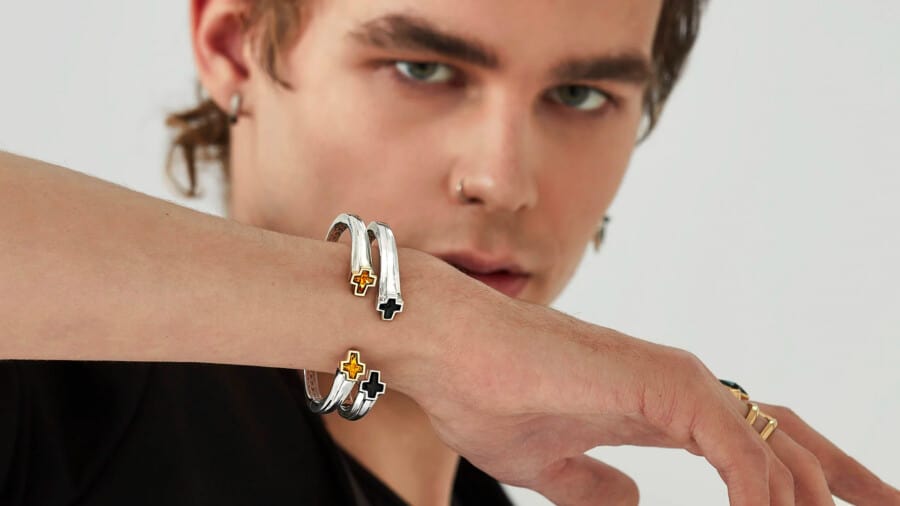
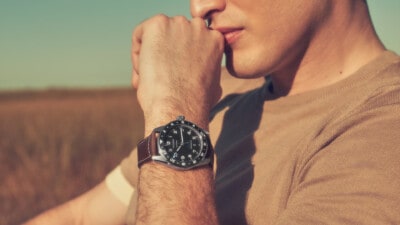
“Gentlemen”, so I was once told by a particularly patriarchal and patronising old man, “do not wear jewellery.” When I challenged this assertion with evidence to the contrary – that of smart gentlemen wearing rings and watches – he scoffed that the rings (‘likely to be wedding rings’ he suggested) were more like manacles and that wristwatches were too practical to be ever considered jewellery. Though this gentleman did happen to be one of the fustiest characters I have ever encountered, I did concede that he had a point; male jewellery tends to be hidden (like a necklace), vulgar (like an earring or a bracelet) or functional. We are quite the less decorated sex. Whereas women adorn their necks and wrists with gold, silver and gemstones, men plod along plainly. Not that this should not be so. The bejewelled men of preceding centuries, perfumed powdered and puffed, seem to be awkward and inconsistent representations of masculine style; a man is very easily over ornamented.

This is perhaps why wristwatches have become so significant for the modern man. Being able to tell the time is not something one needs such contraptions for in the modern age; mobile phones and Mp3 players, carried around by many men, not only carry such basic information as the relevant hour and minute but also the day of the month, the average rainfall and the time in Honolulu. Choosing to buy an attractive watch has much more to do with aesthetics and prestige than mere function; over half of those truly vulgar wristwatches covered in diamonds are so glitzed with the gems that it makes it nigh on impossible to read the time. A man could not claim he needed the watch to function as a watch; it’s merely an expensive bracelet that happens to have a watch face.

And so we come to the rub of the issue: functionality - the perfect, and quite necessary, excuse.

A man’s daily clothing offers little in the way of potential bejewellment; shirt studs are strictly for evening shirts only and tie pins, though elegant, are really occasional and not everyday. Tie ‘clips’ or ‘bars’ can smarten up the wear of shirts and ties, particularly when the clip is fastened to highlight a particularly lustrous silk. However, wearing one everyday can be a little repetitive, considering it’s prominence in an outfit.

Cufflinks are the one everyday item that can add what has been referred to as ‘bling’; the merest flick of the wrist and the ‘jewels’ are exposed. The essential factor? They are entirely necessary to keep one’s double cuffs securely fastened. As their function is simple and, once fastened, they can be easily forgotten, a man can afford to decorate as conservatively or as garishly as he wishes.

Buying cufflinks is very much a matter of personal taste. I tend to avoid the twee hot and cold taps, the dire dollar symbols and anything with Playboy insignia. Jan Leslie and Deakin & Francis are excellent, albeit expensive, manufacturers of individual, attractive and tasteful links. Though novelty formats, such as glittering frogs and insects, are not always favoured by very serious gentlemen, they can offer that little touch of humour to an otherwise staid ensemble; even lending a hand to identify, in a harmless and playful way, the identity of the wearer: for example, the charming practice of an Upper East Sider in wearing the delightful ‘wasp’ links from Jan Leslie.


Bookmark, Share or Email this article   •  Leave a Comment


Reader Question: Tips on the Go

July 19, 2008 (2 Comments)

Nick, London: Do you have any practical tips for dealing with stains on clothing and other practical tips?

Sure. First, some practical tips to deal with problems if you are on the road and not within reach of a good haberdasher.

Situation: Unshined shoes.
What to do: First, try rubbing them lightly with a cloth or towel. Much of what appears to be a dullness in the leather is often accumulated dust. In fact, this should generally be done every morning before putting on your shoes. The old rubbing-the-toes-on-the-back-of-your-trouser-leg trick also works, though it doesn’t deal with much other than the toes.

If you’re desperate, eat a banana. Then use the banana peel to give a temporary shine to your shoes. It’s not ideal, but it won’t damage the leather, being natural. Avoid any “quick shine” products as they normally contain silicone, which is effectively giving your shoes a plastic coating.

Situation:
Popped a shirt button
What to do: Use a safety pin. What do you mean you don’t carry a safety pin? Well find one and use it to fasten the shirt, making sure that both ends of the pin lie flat against the shirt.

Situation: Spilled wine on yourself
What to do: Using a dry white napkin, soak up as much liquid as possible from the surface before it’s absorbed, then dab on cold water so the stain stays damp and doesn’t set. Never rub. If the stain is on a suit or tie, ask someone to recommend a good dry cleaner and go immediately. If it is on a shirt, put straight in the wash.

Situation:
Your zipper is stuck
What to do: Check to make sure no fabric is caught; if it is, try pulling the zipper up and then down again. Finally, rub the tip of a graphite pencil along the zipper. Graphite powder is a great dry lubricant.

Situation: Static cling
What to do: Find a wire hanger in a nearby coat closet and rub it along the clingy area; the metal will remove the charge.

And one more non-clothing tip…

Situation: Bad breath in the middle of a party
What to do: Find a glass of water and a lemon. Squeeze as much of the lemon into the water as you can. Either drink it or, if you’re hidden away in a corner somewhere, gargle it.
Next week, some general maintenance tips for your suits…


Bookmark, Share or Email this article   •  Leave a Comment


The Allure of Corthay Shoes

July 17, 2008 (1 Comments)

Pierre Corthay is one of the best shoemakers around, but is not well-known outside France. Trained at both John Lobb and Berluti, he has a pedigree from possibly the two most respected shoemakers in the world, for quality and design respectively.

Like Berluti, he has used some innovative marketing and eye-catching designs to gain attention across France. And he has gradually acquired stockists in Japan, Germany and the USA (Leffot and Bergdorf Goodman). If he were owned by the giant LVMH, he’d probably be as big as Berluti already.

I like Corthay shoes because they are sleek without being pointy (cf. Artioli), have a lovely patina without being over the top (cf. Berluti), and are universally renowned to have great construction (again, cf. Berluti).

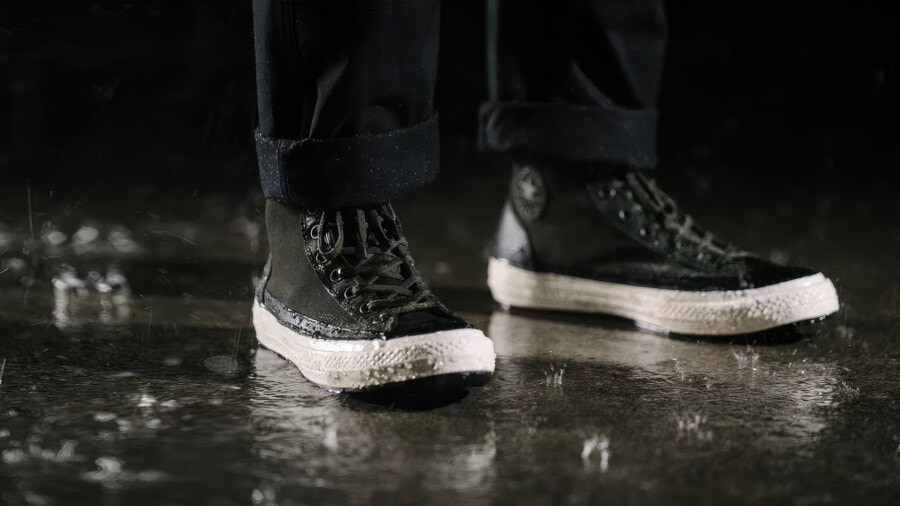
I wore my pair, probably inadvisably, in torrential rain in London recently. They coped very well, without a stain on them and no signs of damage. In fact, come to think of it, they had had a few spots of rain on a previous occasion and there were no marks that time either.

I hasten to add that on neither occasion did I submit the shoes to this treatment on purpose. But as an assistant in the Gaziano & Girling showroom told me that day, “you wouldn’t want to be wearing a pair of Berlutis on a day like this.”

A look at the website (www.corthay.fr) illustrates the Corthay taste for the extreme. Neon-orange leathers and turquoise two-tones are always going to stand out from the crowd. But I am informed that 90% of the shoes they sell are still black or brown.

What blacks and browns though. Highlights are the two-holed derbies with elongated tongue, which look great in smart and clean shades, and the suede-and-calf combinations – a modern take on the traditional business model. I opted for a brown version of the black two-tones illustrated (colour shown in the magnified image).

Having trained at Lobb in 1984 and become the senior craftsman at Berluti in 1985, Corthay opened his own store in 1990. Five years later a contract for 150 bespoke pairs from the Sultan of Brunei kick-started the business, which added a ready-to-wear in 2001. A tricky experience with a subcontractor led the company to start doing its own ready-to-wear and opening its own factory in 2003.

Today, Corthay probably competes with Aubercy for the reputation of the best-respected shoemaker in France. I highly recommend a look next time you are in New York (Leffot, Bergdorf Goodman) or, indeed, are strolling down Rue Volney in Paris.


Bookmark, Share or Email this article   •  Leave a Comment


(Page 1 of 142)12345 » ... Last »

SUBSCRIBE
Latest Articles Via Email:

Delivered by FeedBurner
COLUMNS
Off The Cuff Style (by Chris Hogan)
Ruffs, Cuffs and Farthingales (by Winston Chesterfield)
Permanent Style (by Simon Crompton)
SPONSORS
RECENT COMMENTS
POLL
Bright colored summer trousers?

Yes
No


View results
Archive
Close
E-mail It